
Aspirational energy
Liam Young and windmills

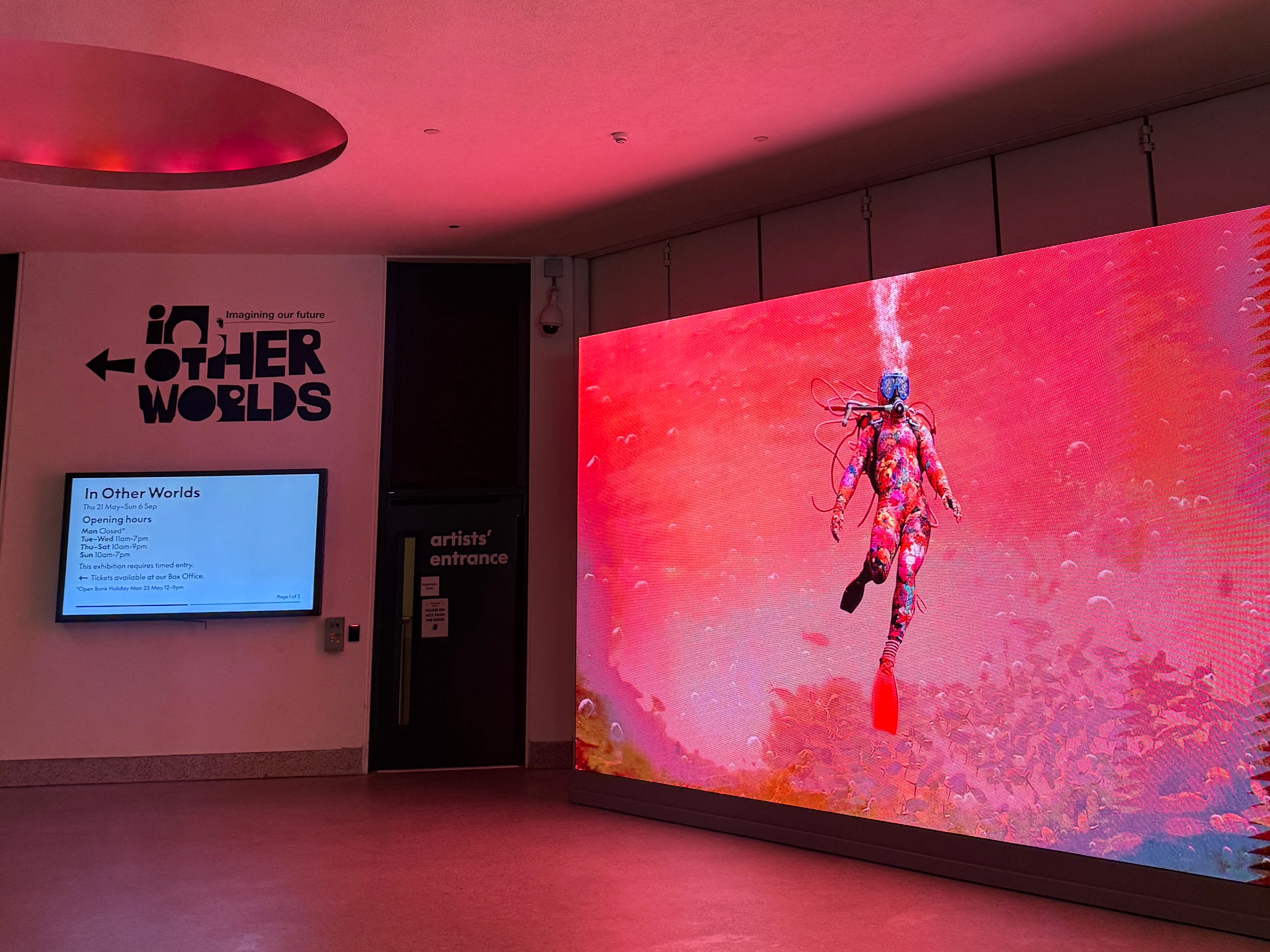
The best part of Other Worlds, Liam Young’s immersive futures show at The Barbican, is the wind turbine room. It’s the almost-final room in a 6 room show crammed with stories.
The turbine room is an arrival point: a cube with four walls, ceiling and floor projected with visions of renewable engineering marvels. Wind turbines spin; cranes lift them into place. Tidal energy plants sit atop the waves, solar panels turn towards the sun.
I went around the exhibition with RADAR, a group of futurists I’m part of - I co lead the London chapter. Discussing the ecological tensions of abandoning machinery, and building new ones, Sarah from RADAR mentioned this game Terra Nil, where, instead of building a thriving industrial heartland, like Sim City, or Rollercoaster Tycoon, players have the chance to take a land back to its start point, to garden a restored, biodiverse earth.
We need renewable energy, for climate and political and economic security. To facilitate this transition, we must find a way to make the plants feel marvellous, a vision of human achievement, our new skyscrapers for the 21st century, a source of pride and excitement. Liam’s turbine room does just that.
We also need to find ways to dismantle old technologies and machinery. A previous substack I wrote covered the cost and importance of dismantling old ski machinery.
Liam’s show imagines turning oil rigs back into reefs, nurturing the barnacles that form, growing new islands of post-industrial resilience.
This week, after Liam Young’s show, I spent five days hiking in Portugal on the Fisherman’s Trail, a walk I have been motivated to do for some time, and finally persuaded a friend to join me this year.
It is unfortunate for us that our experience of the Fisherman’s Trail coincided with a Europe-wide heatwave, but also, if there was a way to make us reckon with a changing weather pattern, walking 20km a day through sand dunes at 30 degrees is probably a good remedy for climate blindness.
To escape the heat, we resorted to leaving the hostels at dawn, 6 o’ clock in the morning, hiking in the blue hour with the swifts and the rabbits, and retreating to shade, desperately, around midday.
Seasons this year have shifted earlier, we are experiencing the heat of summer in what used to be the balmy days of spring. April showers no longer bring May flowers, the honeysuckle I planted last year is shrivelling at the bud.
How do we stop or delay the acceleration of such disastrous weather patterns? A massive switch to renewables is necessary. So let’s make the appearance of solar farms and wind power feel aspirational, magestic, and exciting. Instead of investing in Bezos’ spaceships, let’s use our cultural clout to make it aspirational to engineering innovation dollar into meeting and exceeding our energy requirements.
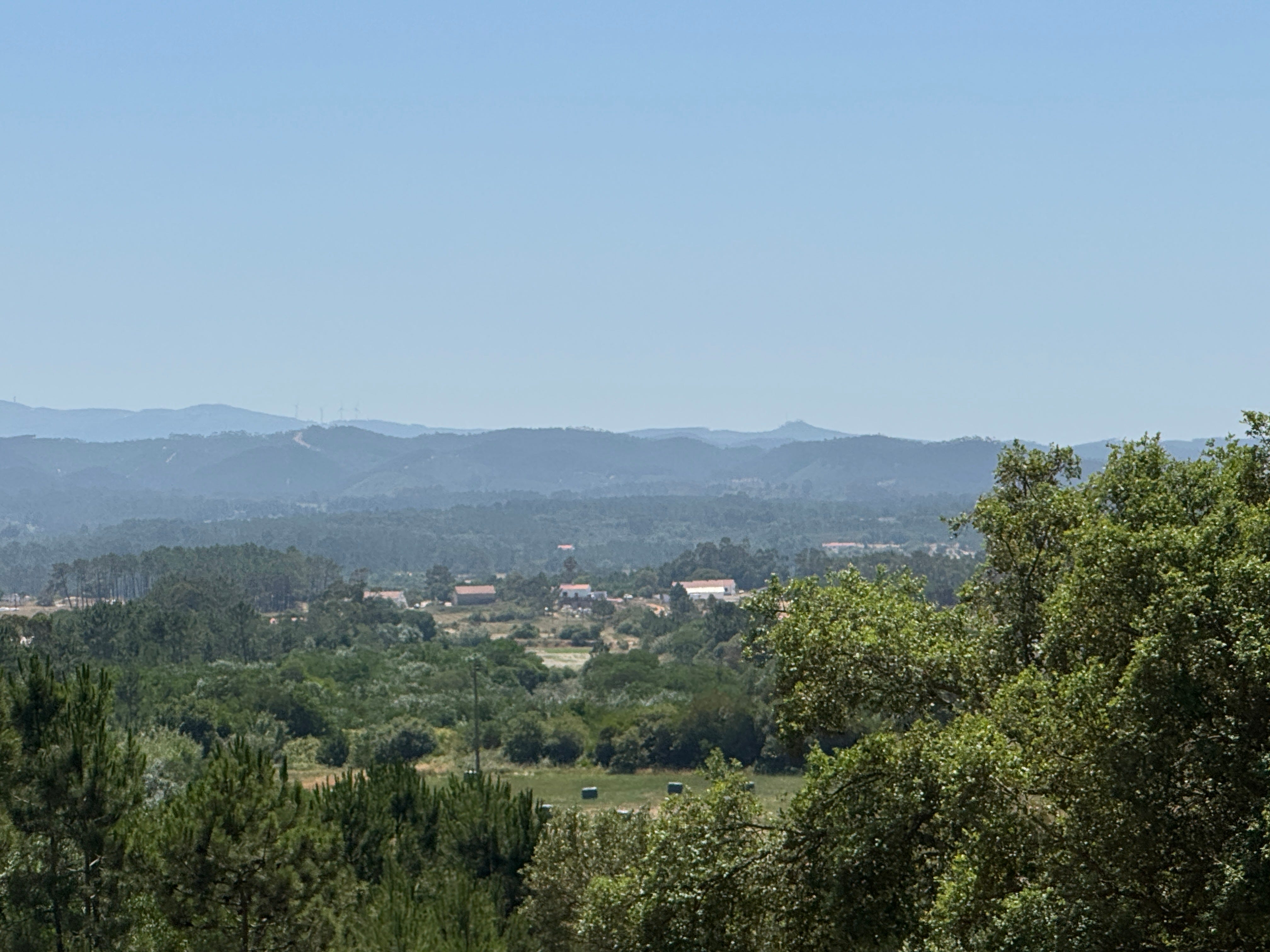
So - more work like Liam’s, please, making images that builds aspiration into these structures. So that, when others see windmills turning on the hazy horizon in Alentejo region, they don’t consider them a blight on the landscape, but a sign of innovation, a positive harbinger of the future, excited to spot them on the horizon, as I am.
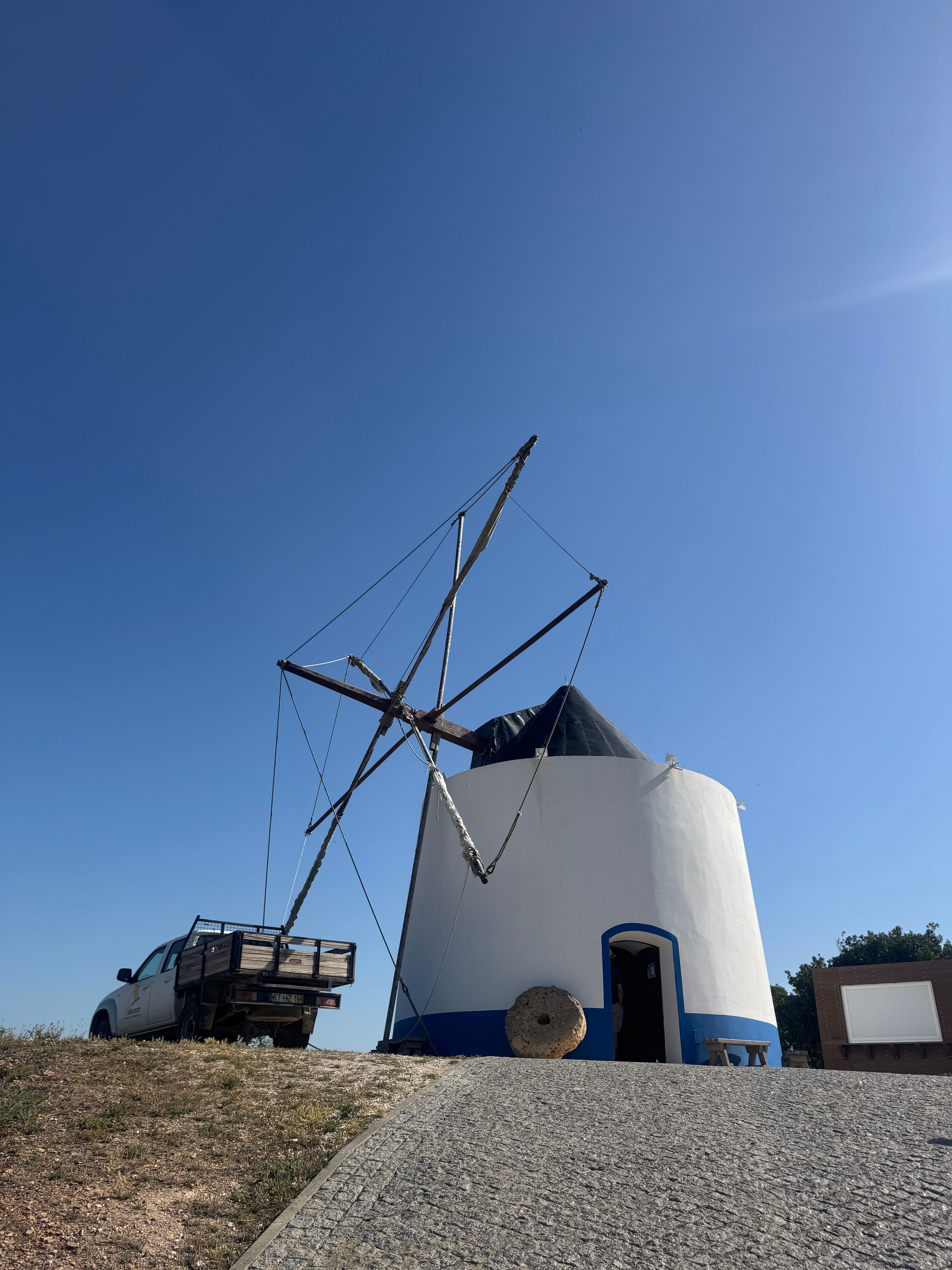
Or perhaps, for those of us less inclined to feel enamoured by stories of innovation, we can shape a myth that shows wind farms as the next natural stage in a historic yet ever evolving relationship between the landscape and its winds.
The windmill above Odeceixe looks ancient, yet it was built in 1890, not so long ago, at a village industrial peak. There is a similarly dated windmill in my parents’ village in Kent. And tourists flock to visit similar windmills in Mykonos or Milos in Greece. We are collectively culturally proud of them.
The mechanism is analogue in comparison to the technology of today’s wind power, but the story of relationship told by the object, between a community, its landscape and the winds that blow through it, is the same.
For those of us who dislike innovation, who are wary and nervous of change, telling a story of aspirational energy transition that is positioned as just one step along on a natural evolution of an everlasting relationship between people, energy and power, is perhaps a more aspirational, more compelling take.
If we can trace this through line of legacy, connecting past, present and future, in a story that is culturally compelling and connects us back to the land, then these windmills, imagined in Liam’s worlds, spied on the hills of Portugal, might become both a source of pride, and a through line with the engineering marvels of generations before us, a reminder that saying yes to hope and change in the past allowed us to grind corn, bake bread, eat better, and get this far.
*
I write weekly on substack and am keen to chat further about new forms of desire and aspiration. Hit reply and you should reach me.
Did someone forward this to you? Hit subscribe to sign up.