
#32 What’s missing from Climate Emergency Briefings
How to make effective messaging and how to model climate positive behaviour

It was standing room only at the People’s Climate Emergency Briefing at the Union Chapel in Islington last week.
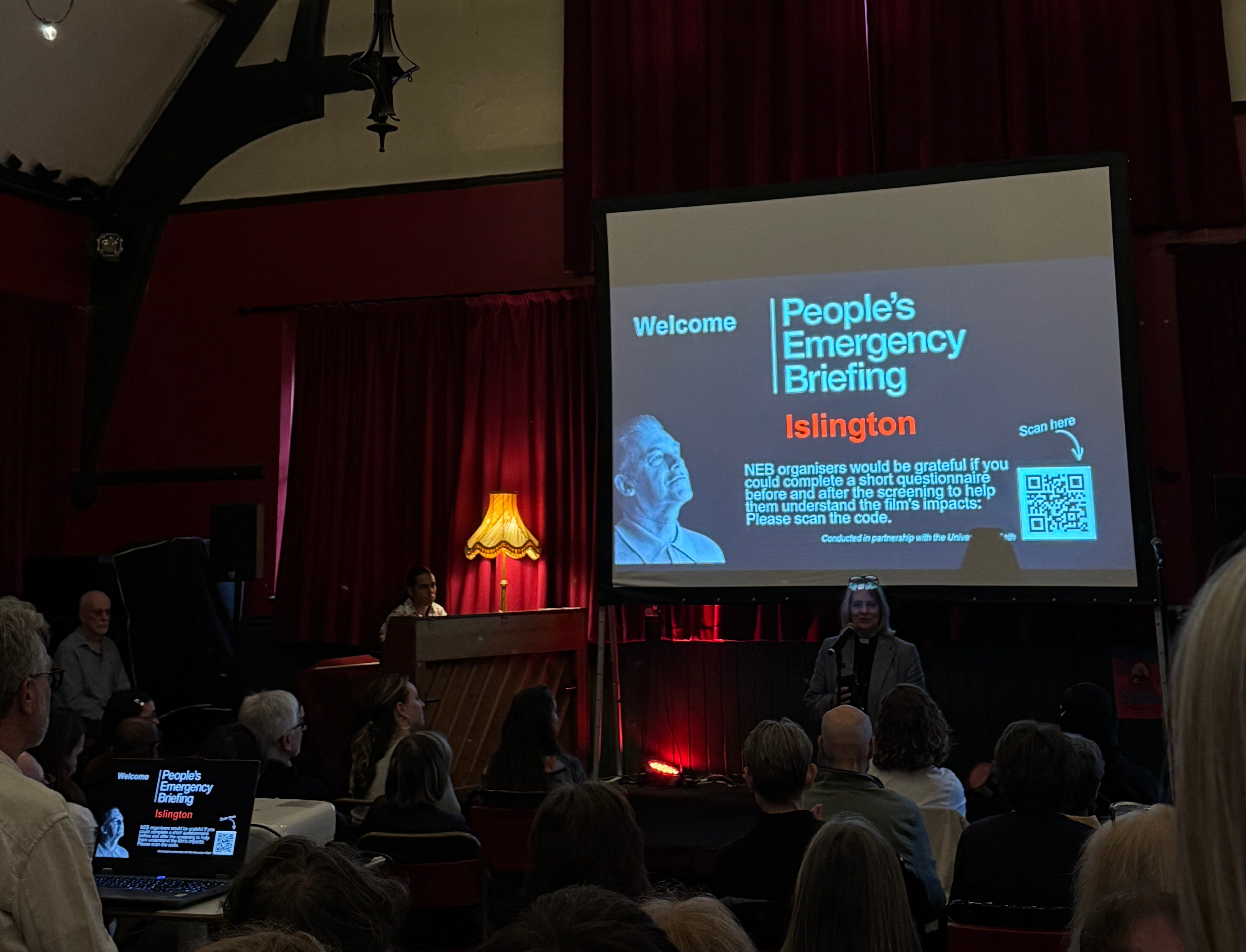
So we stood and watched Chris Packham along with an array of national treasures go through the major climate threats affecting the UK, from terrifying but imaginable food shortages to the terrifying but unimaginable prospect of no more Gulf Stream.
No more Gulf Stream would mean “Day After Tomorrow” style annual cold snap winters and hotter than hot summers, a new state of seasonality that we’d transfer to quite rapidly over the course of only a few decades.
It also explained the droughts and floods that the UK already has, even without said seasonal breakdown - it is hard to hold risk of both droughts and floods in mind, they seem to cancel each other out. But the hot weather and dried-out ground means they are unfortunately, ironically, horribly linked.
The public service announcement is an admirable effort to encourage audiences to hold these truths in mind, feel their impacts as real, and encourage collective action to do something about it. Like all attempts to help us understand the hyperobject that is our climate, it is flawed. But at least the filmmakers and scientists are trying.
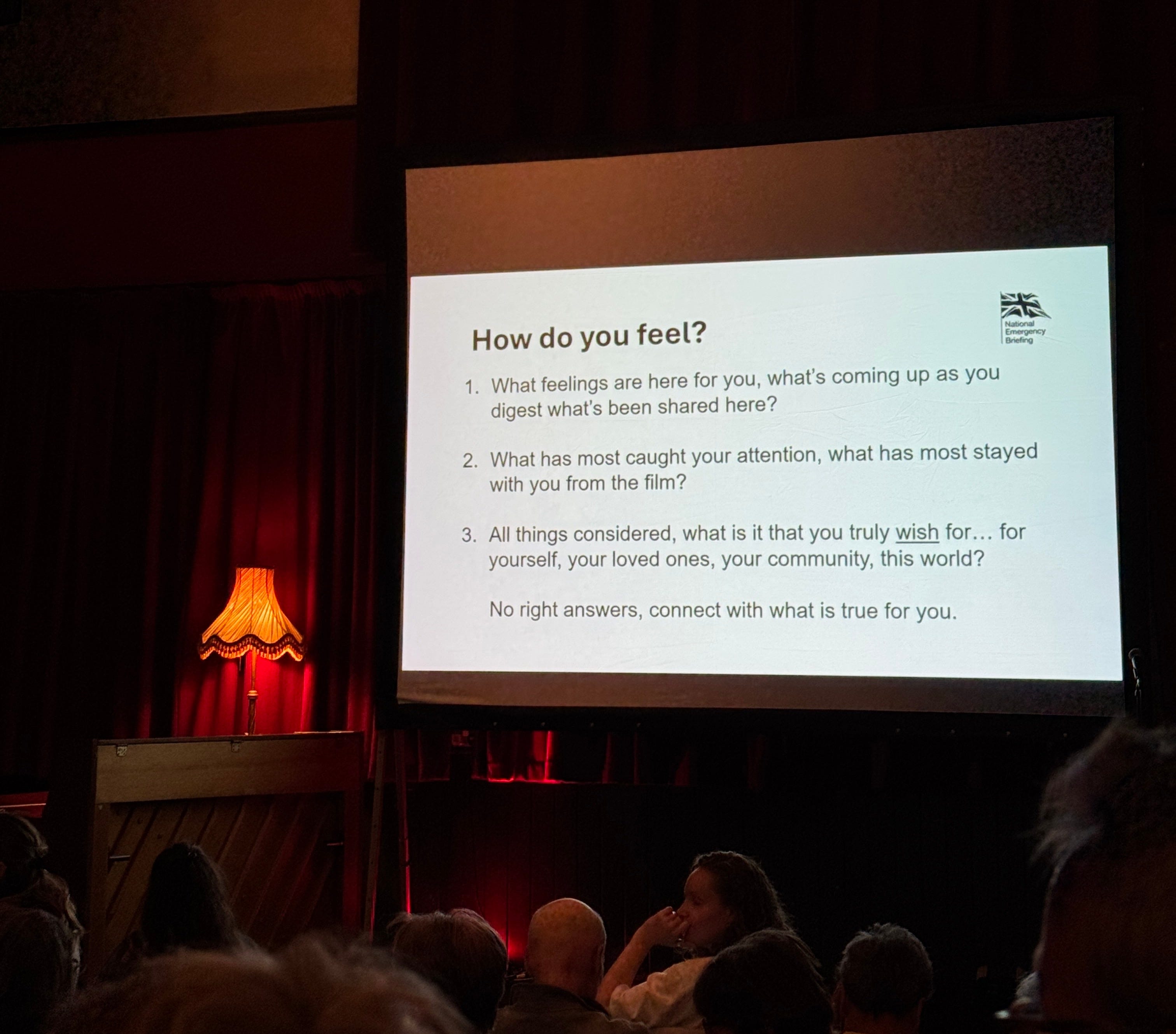
The screening was followed by an invitation to reflect at a personal level on how the film made us feel, and also on its effectiveness, I guess as a piece of propaganda, to communicate and convince unknown other audiences - another hidden way to think about its effects on ourselves.
Many of the audience found the questions hard to grapple with. People wanted to speak, but they brought their knowledge from outside the room into the room, acted as though they were already aware of the dangers and risks, hoped this film would change other people’s minds, theirs were already clear. Education, class and ethnic divisions oozed into the discussion.
When we keep positioning climate breakdown as something we can all “do our bit” on, the finger pointing inevitably starts.
We start to blame each other for ignorance, manufactured scarcity, wilful disbelief, overindulgence, too many children, too few children, a nostalgic overattachment to woodburning stoves. We become consumed with grief and regret for our own complicity, and from grief it is hard to move into action. And what’s desperately needed, is action.
What the People’s Climate Emergency Briefing regretfully misses are the structural forces at play, that prevent us moving towards a more green and pleasant world.
We need a structural shift towards solar power, towards correctly taxing airfuel, towards climate warnings like health warnings on high carbon advertising (petrol/diesel cars and all SUVs, cruises, airports & air travel, red meat, and of course fossil fuels) or even banning them all together, like The Hague has done.
Many, many other structural shifts are needed. But if we don’t get those right, we haven’t a hope in frozen hell to prevent the tip towards irreversible collapse of what we understand as a normal way of life, in the UK, and everywhere else.
*
Awareness of the stakes and all the interconnected risks is of course important. But we don’t actually all need to know all the details to demand that a system needs to change. In fact, if working in advertising taught me anything, it’s that presenting all the details can obscure the key proposition, and make a message less effective.
It’s more interesting, and effective, to think how we can make space for people to be more open to and receptive towards big changes coming down the pipe from policy.
One way to do that, is to work out what that key proposition is, and hinge all communications around that.
I don’t have the answer to what the UK desires most. Reading headlines from various parts of the country, and about the wars in Ukraine and Iran, it increasingly looks a lot like security, like self-sufficiency. And that’s a feeling to be channeled, towards energy progress and structural reshaping, for risk of letting the far right join the dots towards a much darker future. But I am a writing bystander, not too deep in the research, and can only encourage those who are working on this problem to hustle harder to figure it out.
*
Another way to create space for these shifts, although it seems small, is to model and positively communicate behaviour change to one’s direct community. Knowing that small impacts can tesselate outwards and create positive feedback loops that inspire change around us all. But not finger pointing as to why others have not done their bit yet.
So, in the meantime, while I wait for the message of change to cut through, I look at the impacts I can make in my community, with the people immediately around me.
I know, from working in social media, that word of mouth recommendation is a massive and powerful driver of curiosity to try something new. Whether that’s eating less red meat, or fitting an air source heat pump, or choosing not to fly. If we can see the proof that someone else we know and love has done something courageous, and it has worked for them, we are encouraged to try the same.
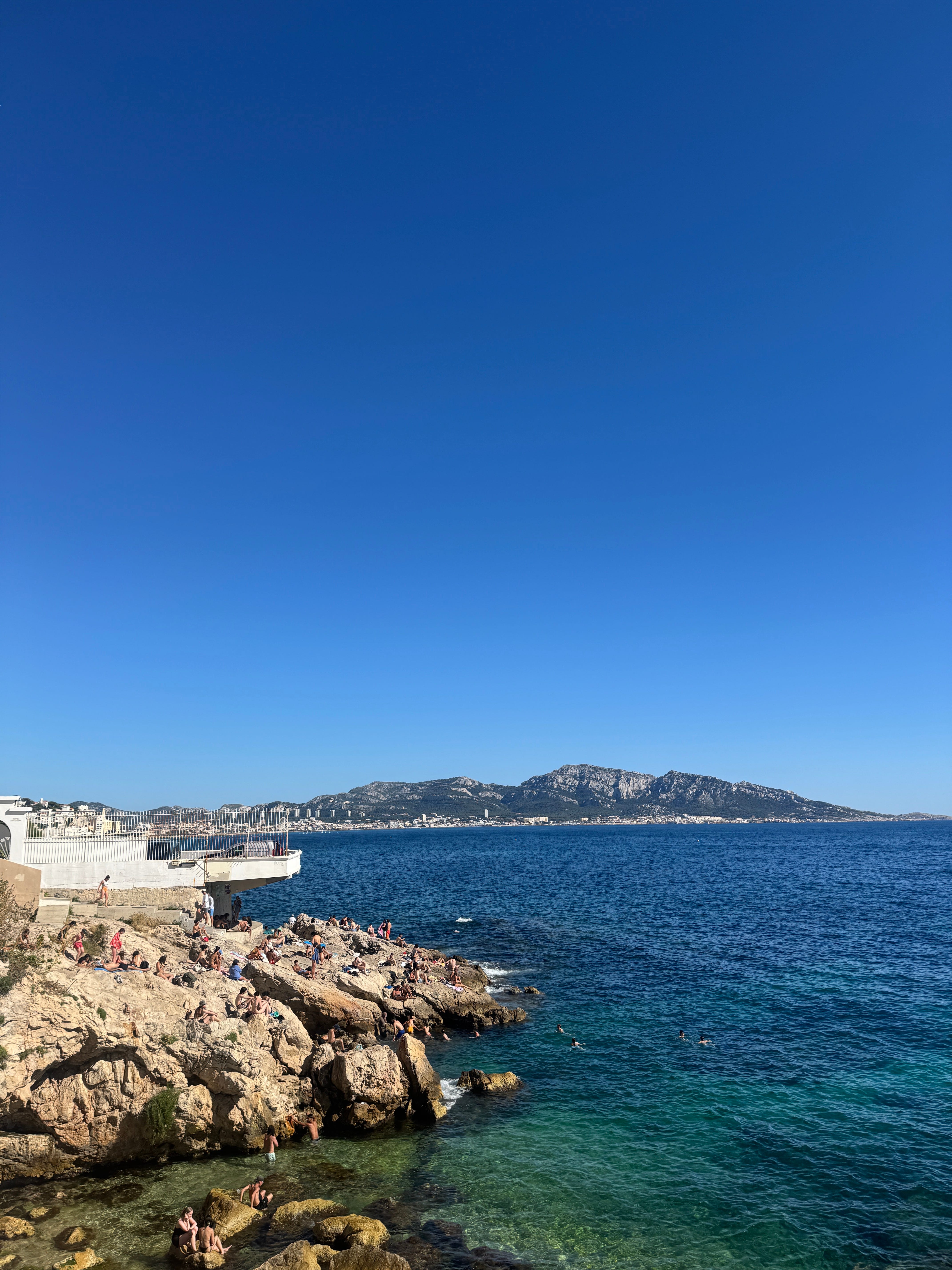
So, I write this to you from the Flixbus that is taking us over the hills from Marseille to Liguria, where we will be for the coming week, working from my partner’s family home.
On Thursday we took the Eurostar to Paris, and Friday morning, we woke up early to get the OuiGo affordable express train down to Marseille, so we could spend the day in the city with friends. We will arrive at our destination in Italy time for supper.
I am fortunate in that I am able to finish my Thursday afternoon’s work on the Eurostar, I know this is not possible for everyone. But I hope that, by travelling in this way, and telling you about it, you might take the train this summer, too. And tell someone about it. And then, and then. Demand goes up, prices go down, new routes are opened up. And we can look forward to a time when the political space is created for the right aviation tax. That’s the kind of climate future I desire.
*
My name is Lara and I’m a writer and strategy consultant. I write weekly here on Substack about new forms of desire and aspiration. Did someone forward this to you? Did you enjoy it? Hit subscribe to make sure you get the next post.