
#16 Signposting The Future
What walking Inca Cueva taught me about our relationship with nature

In Italy there are walks in the hillside that are signposted with the stages of the cross. They lead up to (or down from) a church or chapel, the idea being that as you ascend, or descend, you contemplate Christ carrying his cross up to Golgotha. I suppose, alongside encouraging meditation, it makes the climb more bearable. It also inserts Catholicism into an encounter with nature, a curious mix of penance and transcendence, that centres divine/human suffering in the midst of a walk.
I encountered the stages of the cross for the first time when walking the Via degli Dei in 2018, a 6 day route that takes you over the Apennines from Bologna to Florence. About halfway through our walk, my friend and I got to the brow of a hill and, having never walked so far before, realised that, with the rhythm we had, we could keep walking forever, to Rome and beyond.
It slowly dawned on us the enormity of what it meant to put all your belongings in a single bag and step out, to put one foot in front of the other, towards some as-yet-unknown future. As we made our descent, we came across the stages of the cross, the struggle and the burden, the belief in hard work, the promise of a life after this one, that might be better than the one we’re leaving behind, suddenly very real indeed.
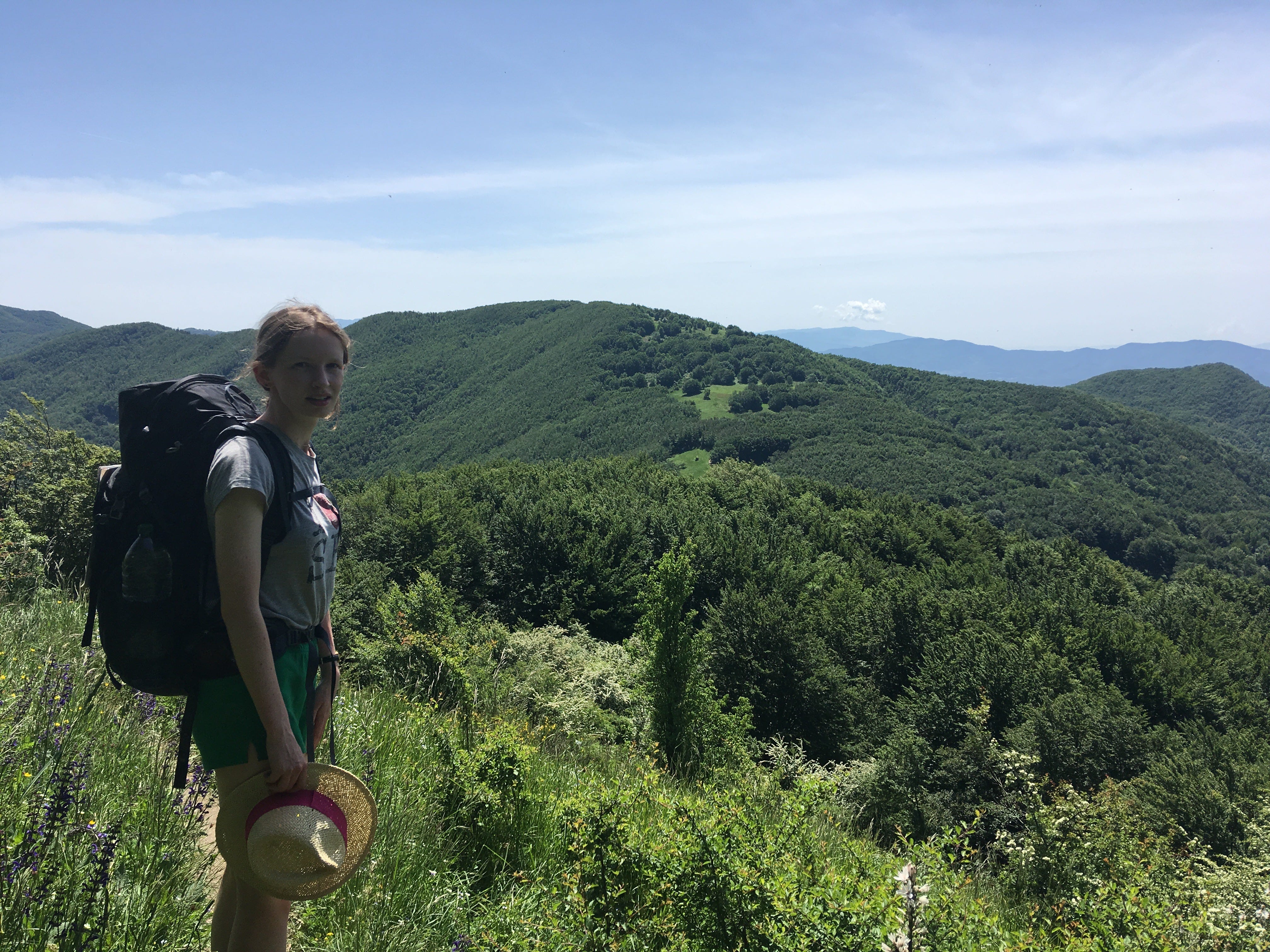
Walking the Via degli Dei, most of the signs were in the classic red & white stripe of the Club Alpino Italiano. When they faded out, we looked for white and neon green spraypaint, as it felt a bit like it had been following us around, so perhaps it was also marking the way. When these hastily-drawn crosses and arrows on tarmac and tree trunks faded out too, we looked for (I kid you not) bits of white plastic bag tied to trees and bushes, that we hoped would keep us on track.
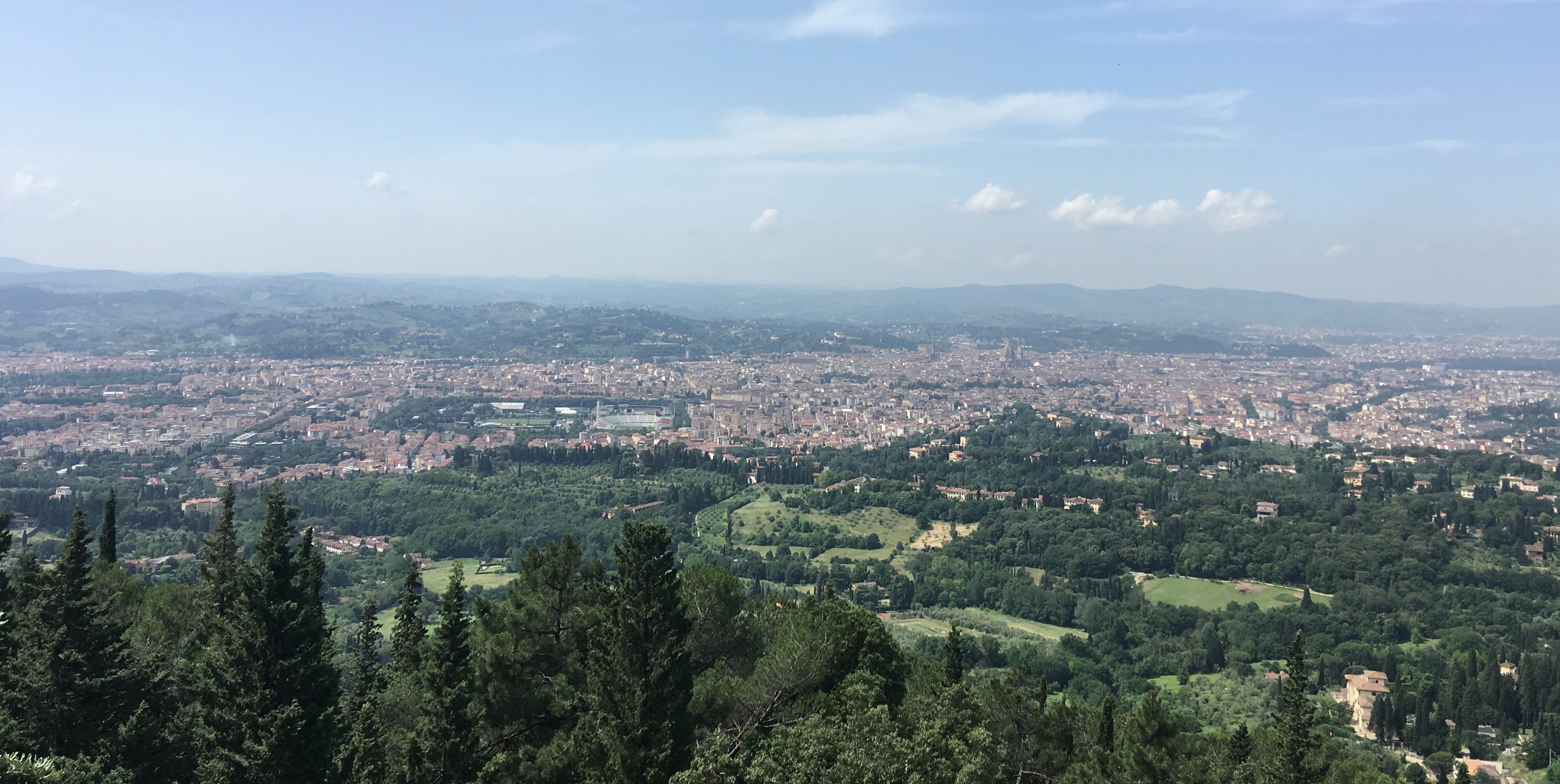
On the penultimate day this helpful guesswork was rewarded with a big piece of graffiti sprayed over an electricity substation just outside of Fiesole telling us FORZA and then some sort of swear word that I think loosely translated to something obscene to do with a pig. Beyond this, Florence.
Wayfinding is something I have learnt a bit about since cycling in London. I have a partner who is a keen A-to-B cyclist and has shown me all the back route and quietways near our house. He has explained that signs on bike trails are a recurring source of debate. Experienced cyclists know that no sign on the road means “keep down the path you are on”. Inexperienced cyclists, on the other hand, need reassurance that the way they are on is the right way, especially if the “way” suddenly changes to a no entry except cyclists road or a series of questionable roundabouts. Or the exit from Chancery Lane down to The Strand, which I still haven’t cracked.
Which brings me to the hike we made together to Inca Cueva in Jujuy, Argentina.
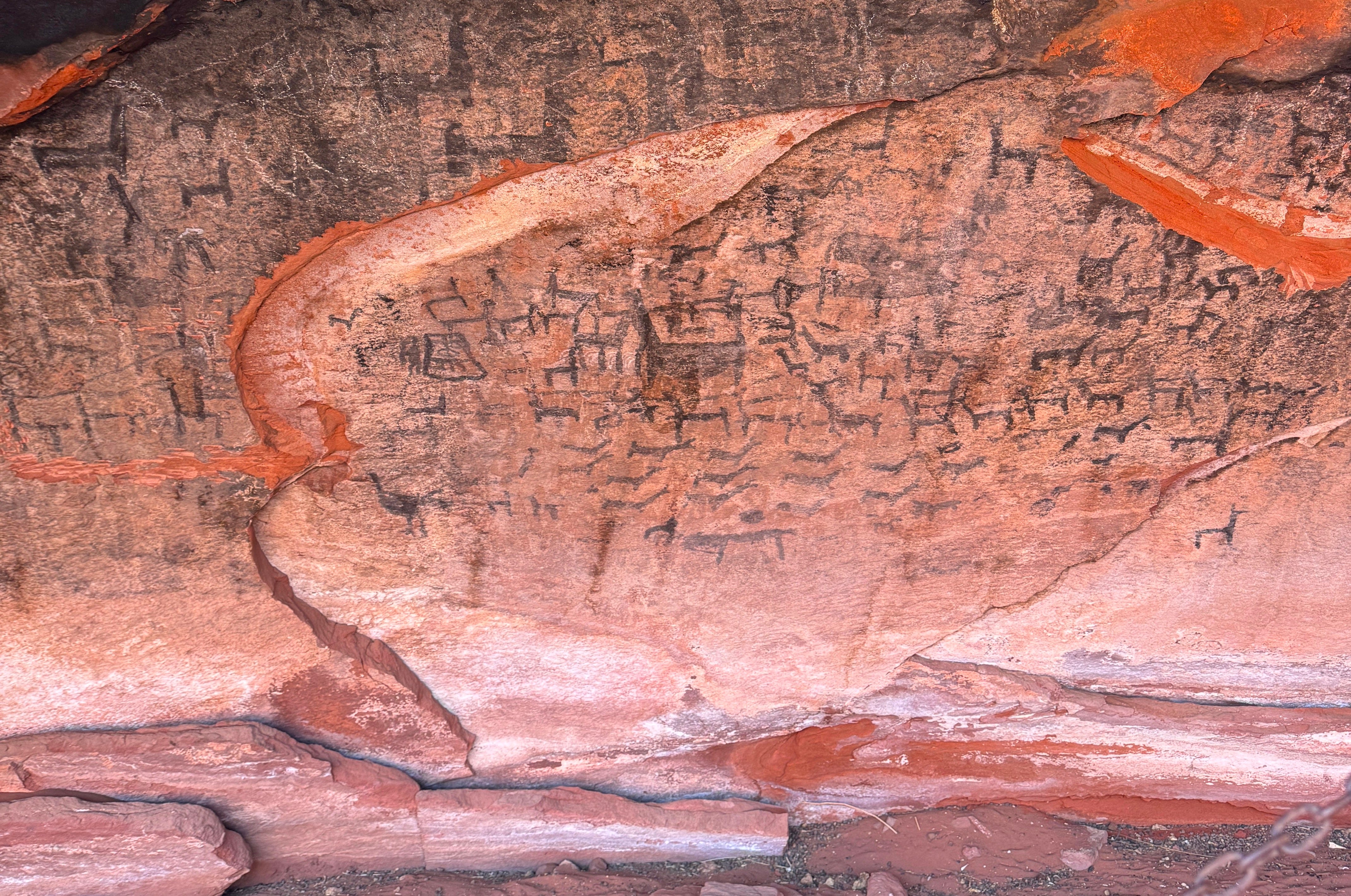
Inca Cueva, is a hollow under rocks, filled with Indigenous and Inca-era cave paintings. The way is about an hour’s walk along a riverbed, that takes you up into a sort of miniature canyon/crevasse, which is empty of water in the dry season. There are many spraypainted arrows pointing along this riverbed at the start of the trek and then, suddenly, none. Not even a helpfully tied scrap of a plastic bag.
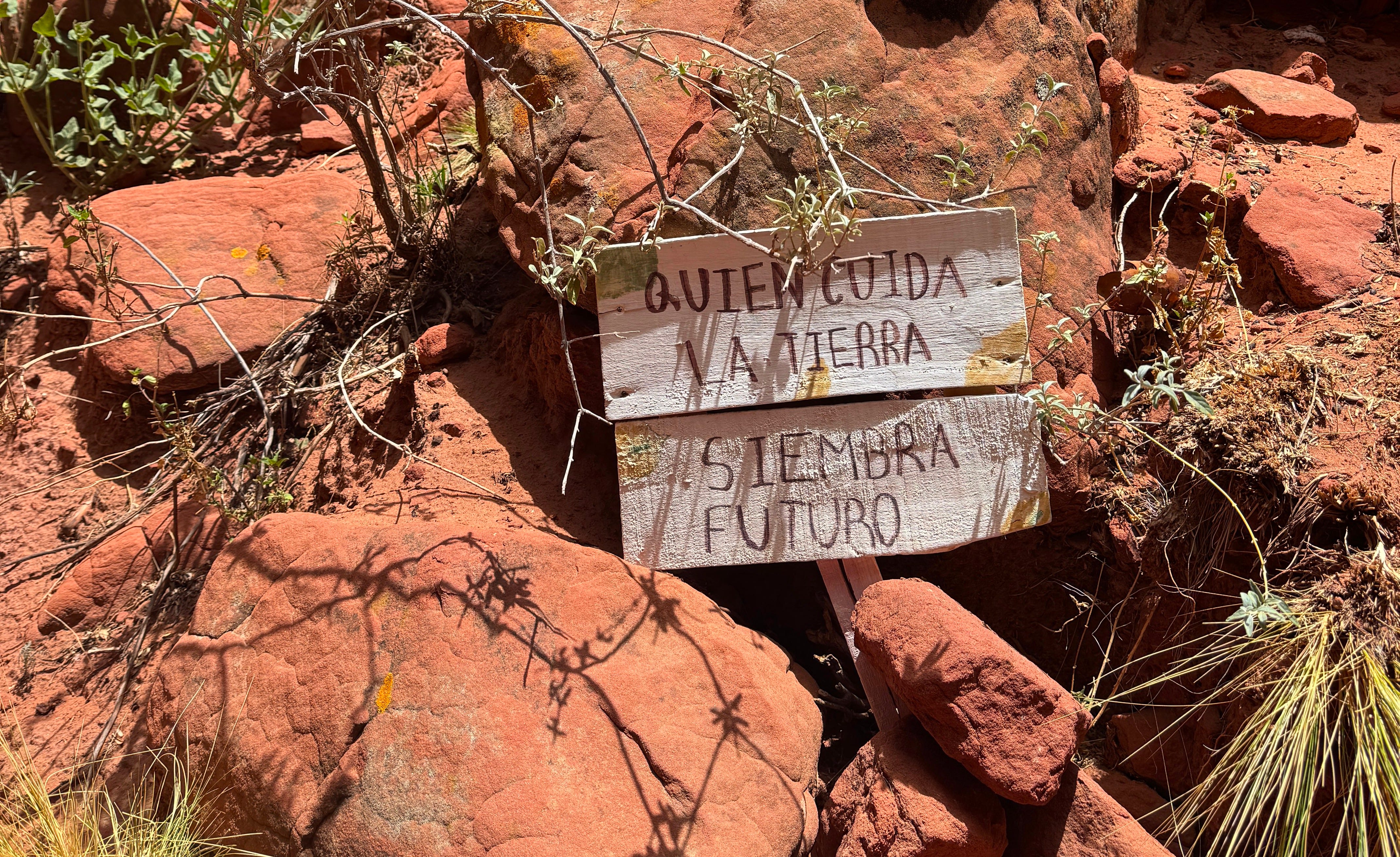
Although we lacked for arrows, when we did finally find the path again (by following the river bed), we were rewarded with a series of beautifully and thoughtfully hand-painted signs by a local artist, whose name I believe is Pablo Flores.
Instead of advising us which way to go, Pablo’s signs remind us of how to think about the nature we are passing through, from an ecological and conservationist perspective. Not “this way only” or “do not walk here” but “plant seeds” or “this is our garden, protect it from rubbish” and other heartwarming eco-positive messages.
These gentle signs curiously reminded me of the stations of the cross, in the sense that they encourage reflection on the surroundings we were passing through: what to think about, how to respond to the environment we were witnessing. Yet instead of reminding us of human hope & suffering, they took a universal, multispecies approach.
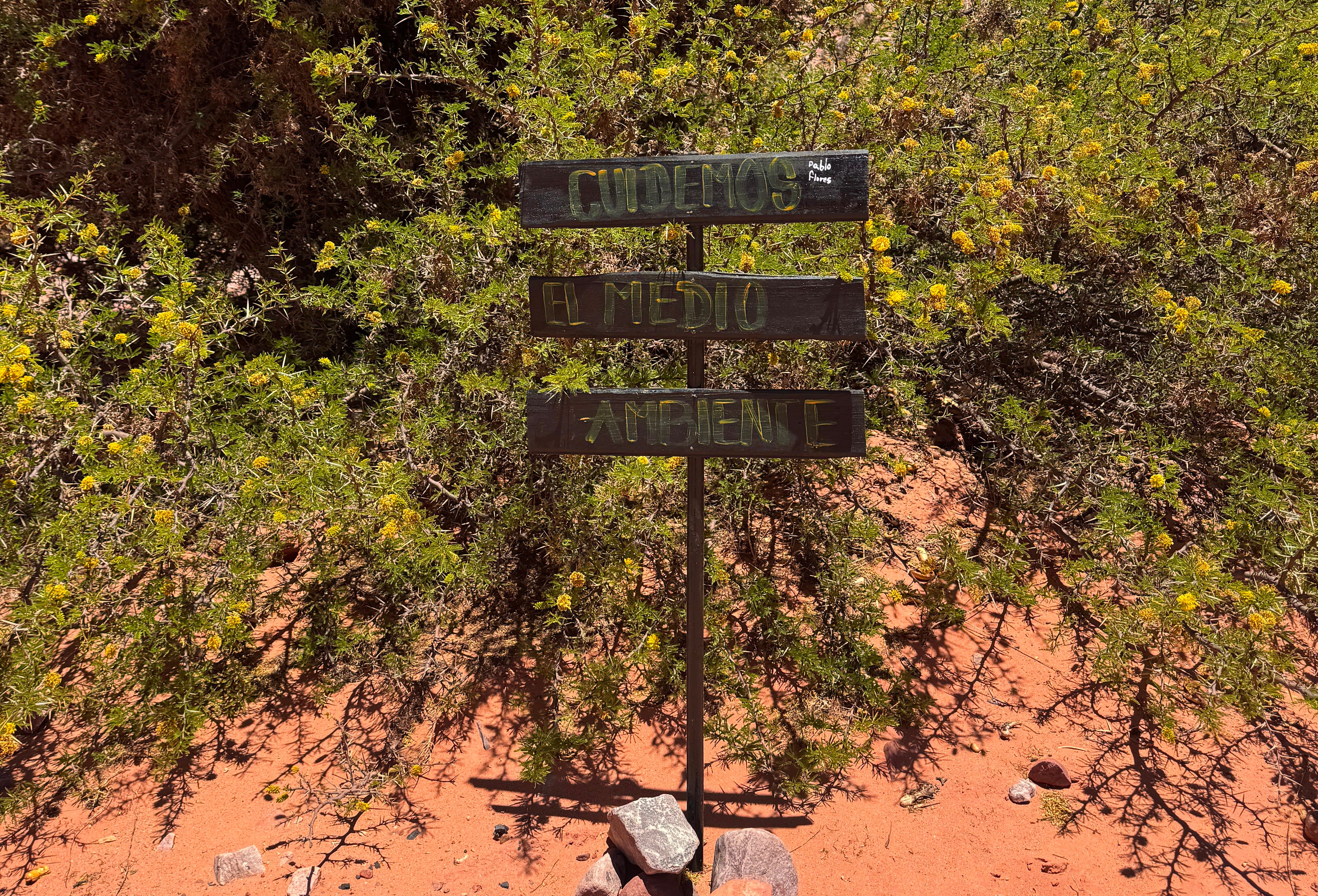
My understanding is the philosophy of these signs came from the Inca belief of Pachamama, or Mother Earth, a goddess responsible for the world, and time. Collectively, they reminded us that we are part of, indeed indivisible from, the nature that surrounds us.
Their positivity and attitude also rather randomly reminded me of Thaler & Sunstein’s nudge theory, prompting us into more positive behaviour vis-a-vis our environment. The messages were valid both then and there on the walk, and could be carried away from it, back home. Looking out for and spotting these signs, each one salvaged and carefully painted, created a cumulative sense of positive emotional reinforcement and agency to do the right thing, just like Thaler and Sunstein advise.
Inca Cueva was historically a place of messages, a passing pace for indigenous tribes moving from one side of the valley to another, and journeying from the altiplano in Bolivia down to the fertile valleys in Argentina. They used the walls as a calendar, a place to mark time, to fortune tell by the sun, to tell stories of their culture, and ultimately to warn others that Spanish conquistadors on horseback had reached the area. That we now lean on Inca teaching to signpost how we might live alongside our environment, feels like we’ve come full circle. A recognition perhaps of what we always knew, but lost, with Christian-coded cultural directives to strive through suffering and sorrow, attempt to conquer nature, wreak havoc in the process.
*
I write weekly on technology, culture & storytelling and am always open to chat more about ideas here or projects to collaborate on. Hit “reply” and you should reach me.
Did someone forward this to you? Drop your email below to subscribe.